Product
Sękacz
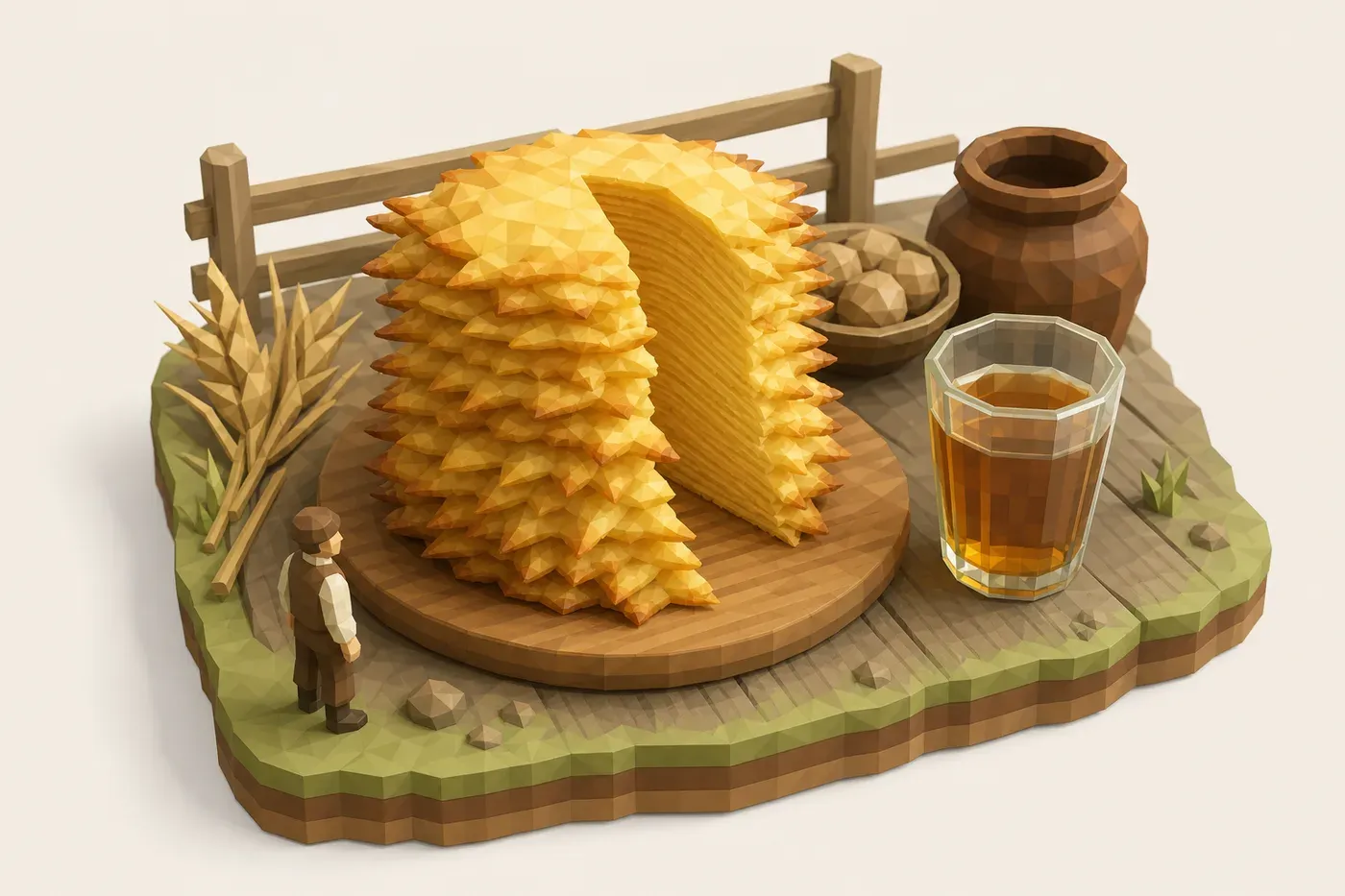
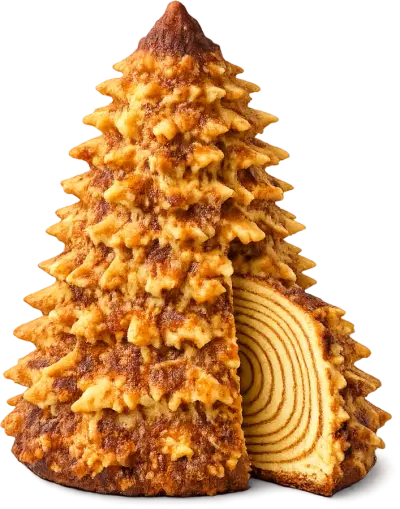
A layered cake baked on a rotating cone over embers. It is the festive cake of Belarusian and Polish villages: in Poland it appears on the table at every celebration.
What it is
Why it works
- 01
Taste
Crisp "branches" outside and a dense egg-rich centre. Butter, caramel and a light smokiness.
- 02
Why people buy
An edible souvenir that keeps for 3–4 weeks. Polish guests know it as sękacz and are used to paying 100 zloty.
- 1 kg cake60–90 BYN
- First incomeMarch of year 1
How we make it
How we make it
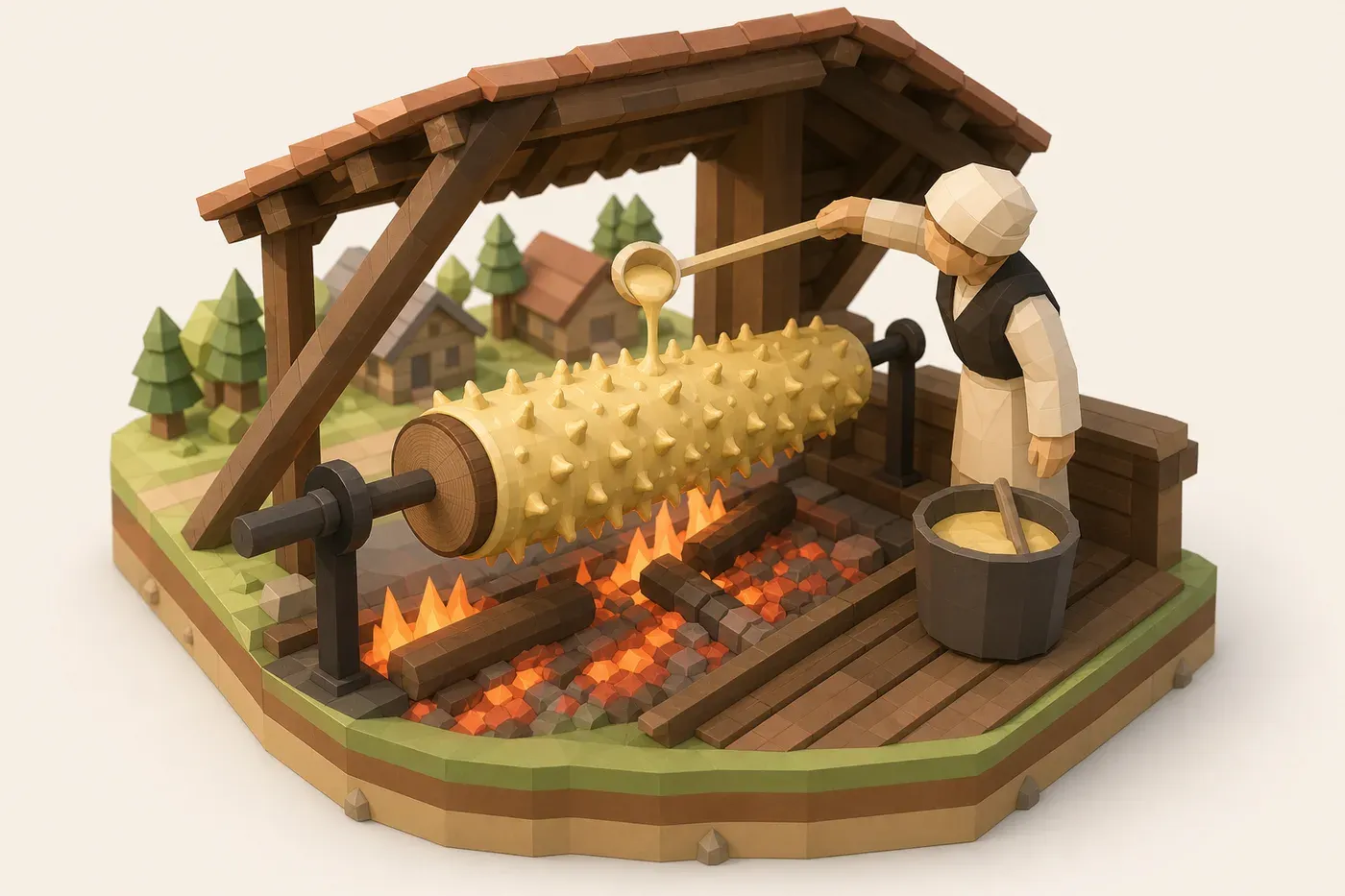
Sękacz is baked in layers: the cone turns over the embers while batter is ladled onto it, layer after layer. The first cakes come out crooked, and that is normal: you can only learn the heat of the embers and the thickness of the batter by hand.
The spit
A frame, a shaft and a motor turning at 3–5 revolutions a minute, for example from a grill. Two alder-wood cones.
The hearth
A brick hearth under a canopy. The embers go to the sides: from below, the cake would burn.
The batter
For a 1 kg cake: 20 eggs, 500 g each of butter, sugar and flour, and sour cream.
Layers
The cone, wrapped in parchment, turns while we pour the batter from a ladle. Each layer bakes for 1–2 minutes, 25–40 layers in all.
How we serve it
How we serve it
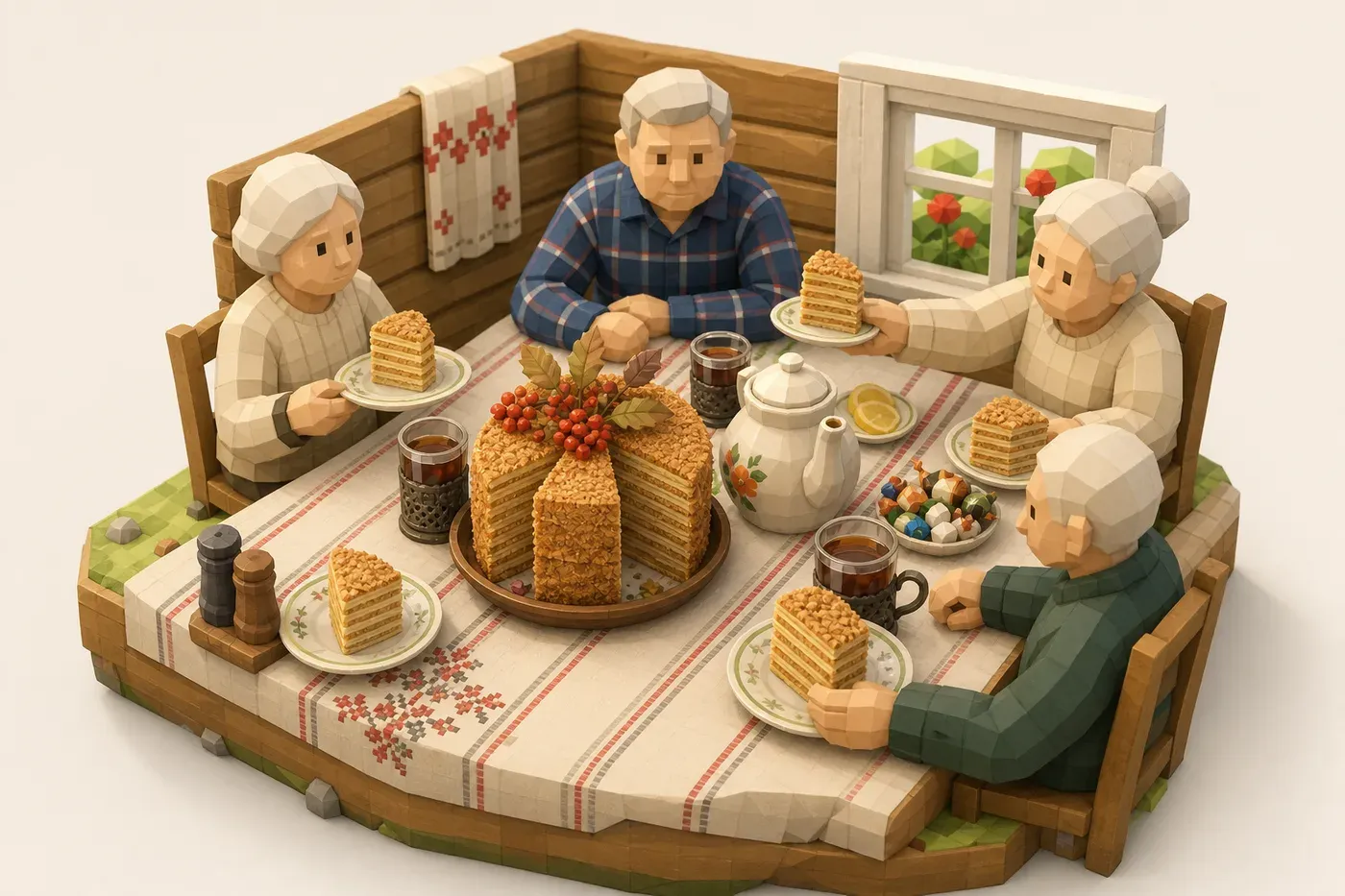
In Poland sękacz is on the table at every celebration, and Polish guests are used to paying 100 zloty for it. Here it works both as a souvenir and as a show: the guest turns the spit.
- 01
With tea
A slice with tea or coffee in the dining house.
- 02
For celebrations
A whole cake in the middle of the table: weddings, anniversaries, Christmas.
- 03
With ice cream
A slice of cake, vanilla ice cream and birch syrup.