Product
Birch tar soap
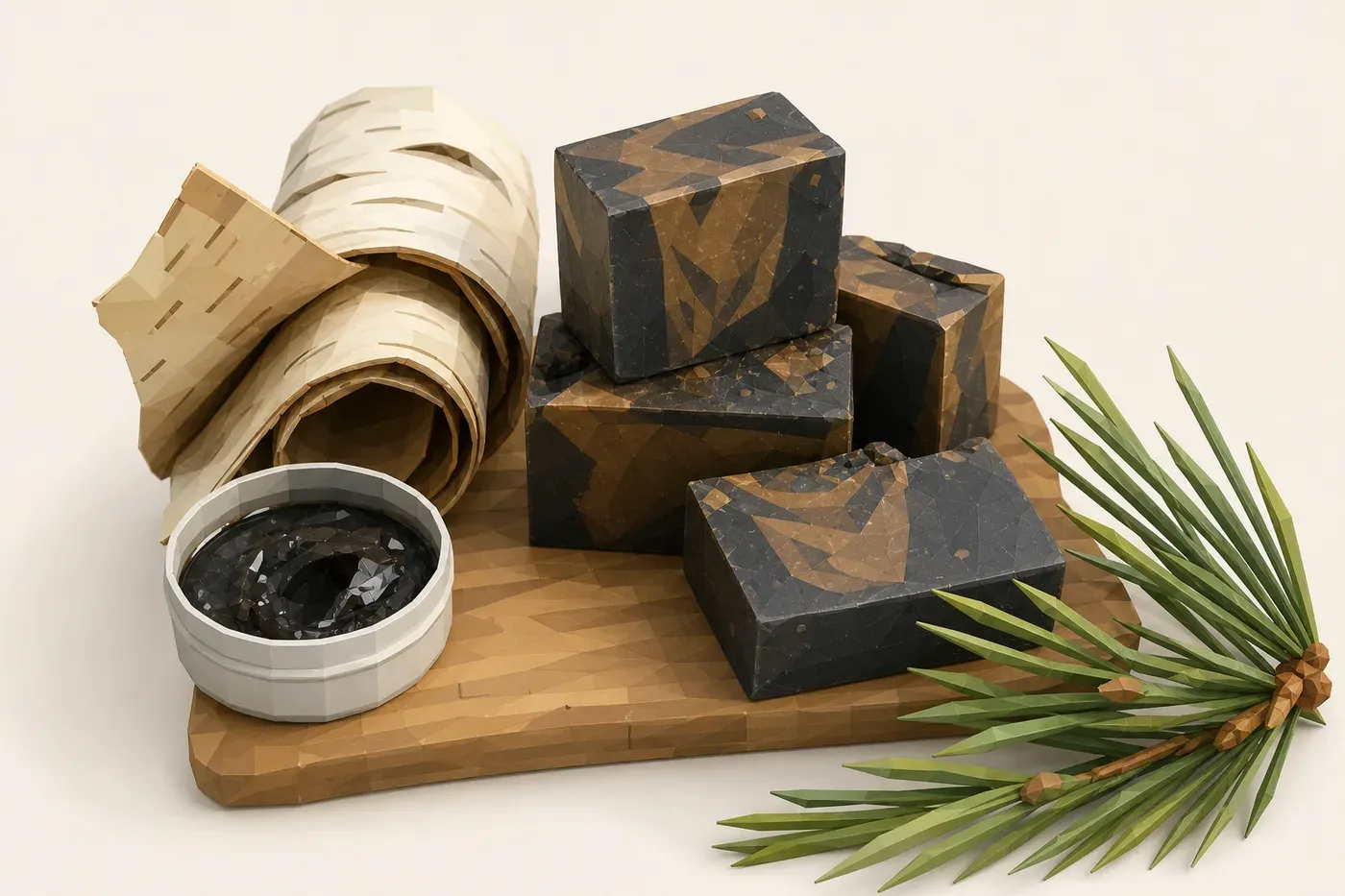
A dark soap made with birch tar, smelling of campfire and forest. It has the cheapest start of all our products. It sells easily: a guest washes with it in the banya (wood-fired bathhouse) and takes a bar home.
What it is
Why it works
- 01
Benefits
For centuries tar was the village's main antiseptic. The soap helps with dandruff and problem skin, with no synthetics.
- 02
The range
With chaga, with pine needles, and with honey and wax from our log hives. A 100 g bar in a paper wrapper.
- 100 g bar8–15 BYN
How we make it
How we make it
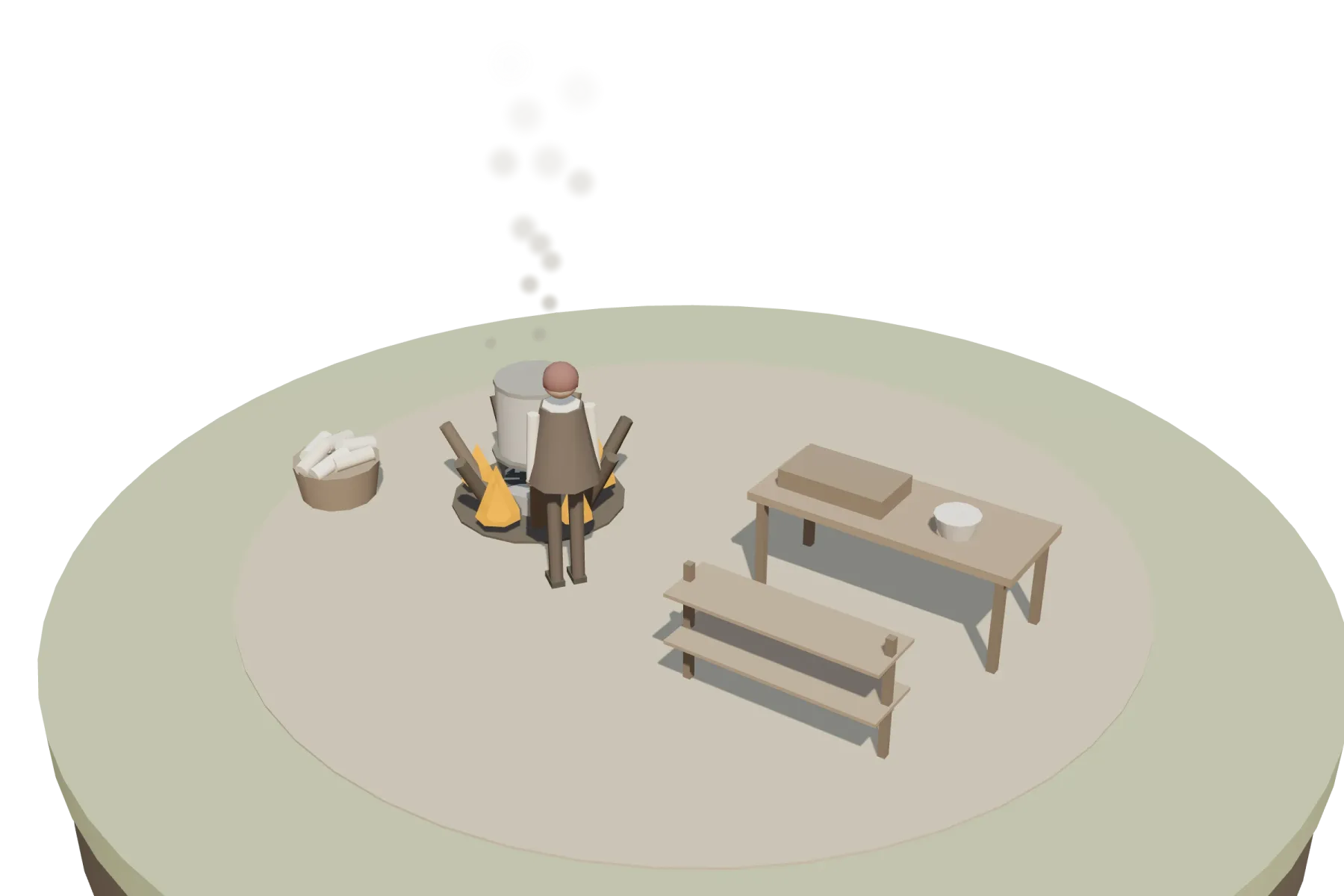
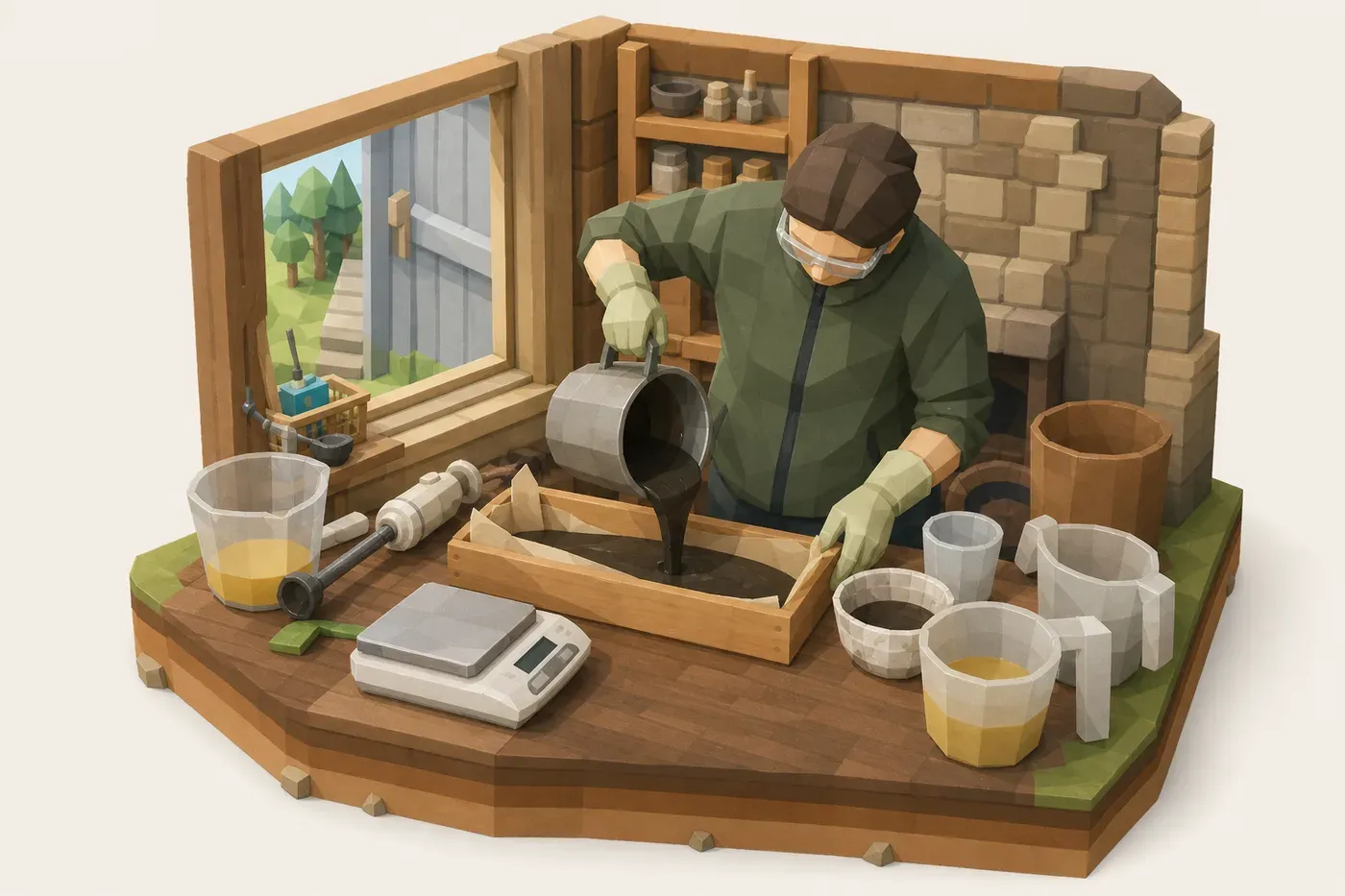
We make the soap by the cold process: the oils and lye combine on their own, with no cooking on the stove. A 2 kg batch takes an hour, then the bars rest on racks for six weeks.
The recipe
We work out the oils and lye in the free soapcalc calculator. The oils are olive, coconut and sunflower.
The lye
We work in goggles and gloves, outdoors or by an open window. The lye goes into the water, never the other way round.
Mixing
We combine the oils and the solution and blend until it is as thick as thin sour cream.
The tar
We add 5–10% birch tar, and chaga or pine needles if wanted.
How we serve it
How we serve it
The soap sells itself: a bar lies in the banya, the guest washes with it and takes it home. Next come gift boxes, the post and wholesale batches for other banyas and hotels.
- 01
In the banya
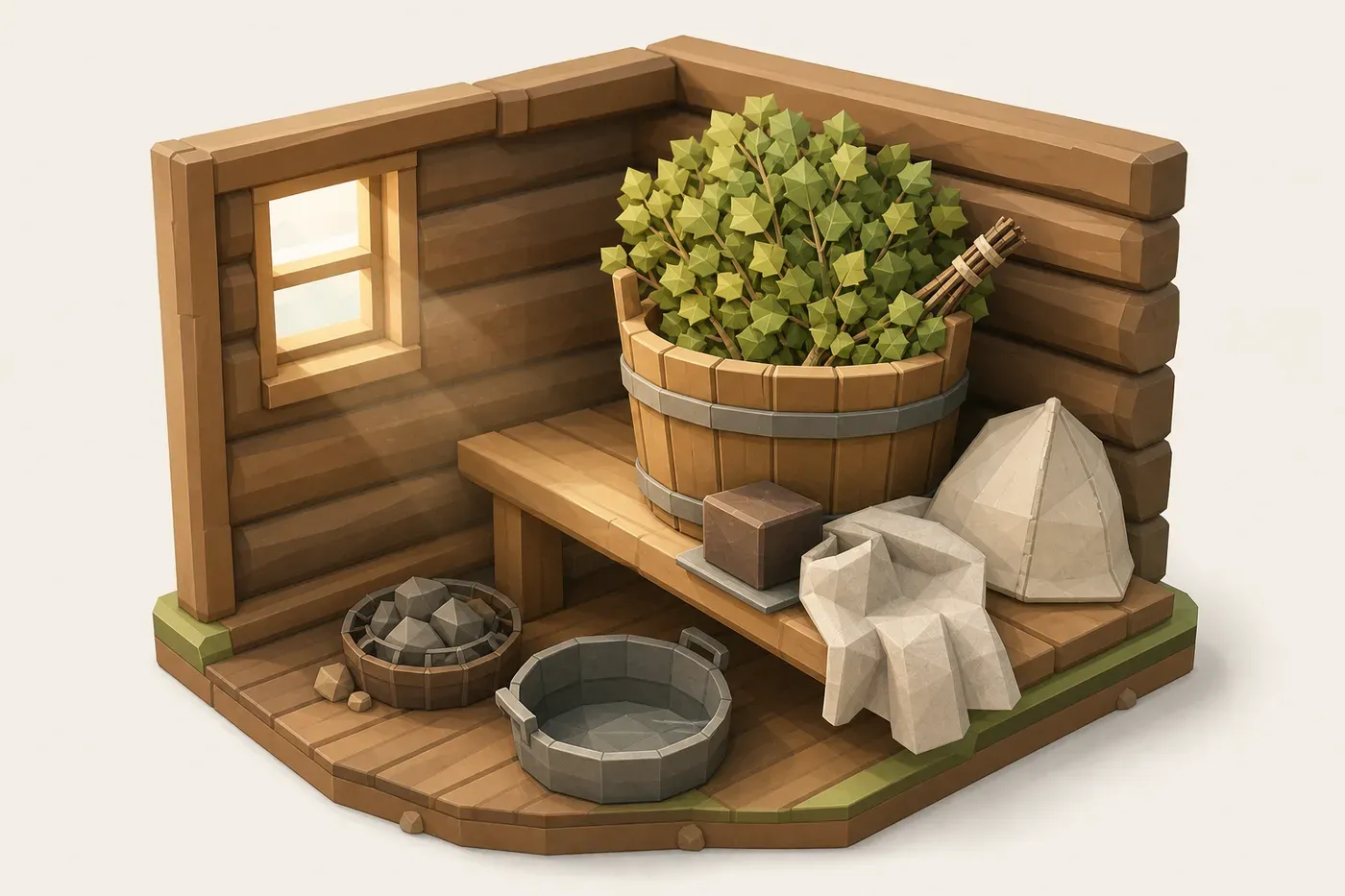
A bar lies in the farm stay's banya. The guest tries it and buys one to take home.
- 02
The range
Classic, with chaga, with pine needles and with honey from our log hives.
- 03
Gift box
Together with syrup, cheese and honey in an alder-wood box.