Product
Kumpyak
A Belarusian dry-cured ham, similar to jamón and prosciutto. It has almost vanished from the shops, although everyone knows jamón. Our aim is a ham that stands up to the Spanish one. That depends on the breed, the age of the pig and long ageing.
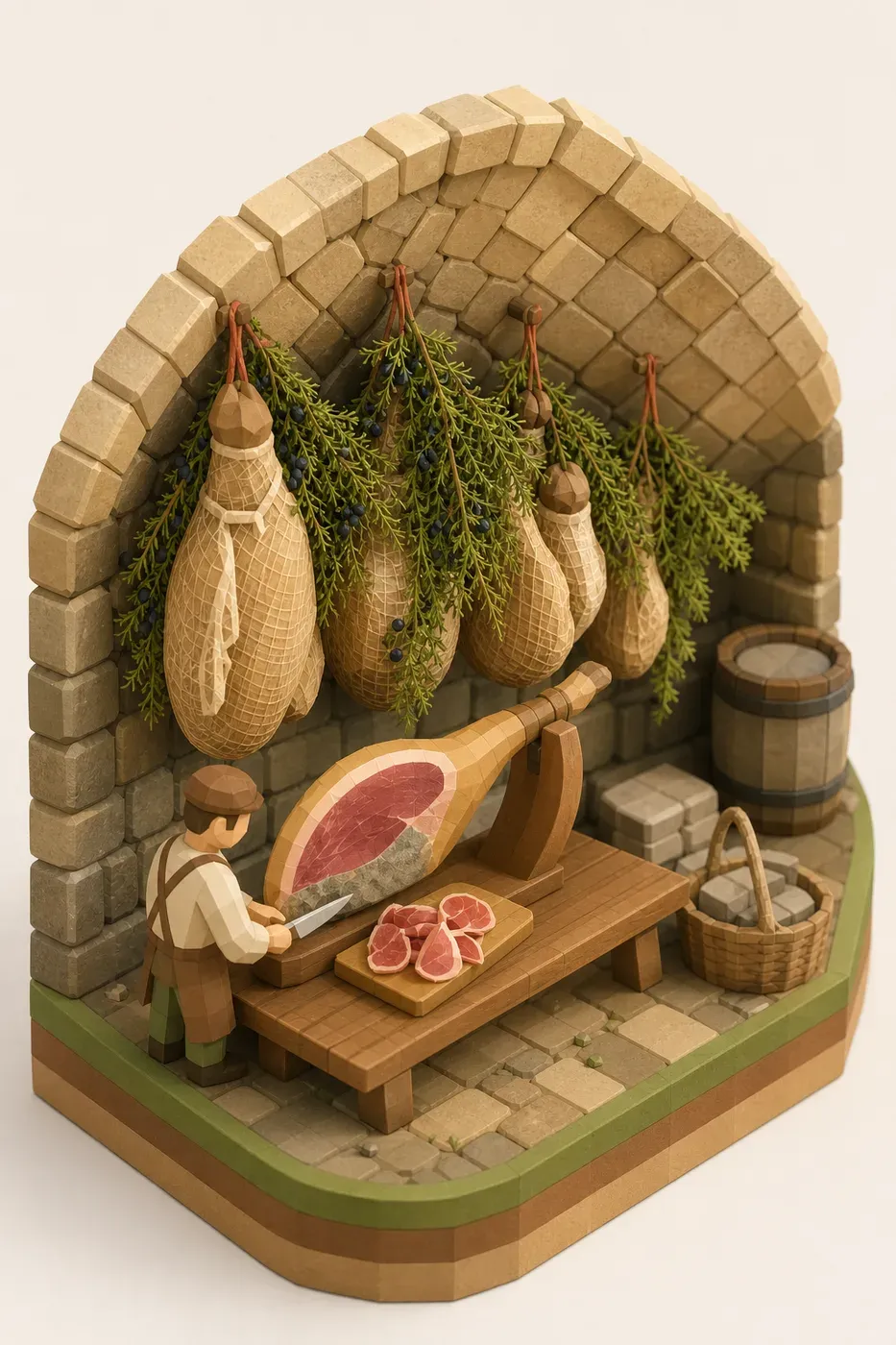
What it is
Why it works
- 01
Taste
Dense, salty-sweet, with the nutty aftertaste of long ageing.
- 02
Why people will buy it
Jamón in Belarus costs from 150 BYN per kg. Kumpyak is bought as a local jamón.
- Price per kg80–120 BYN
- First incomeafter 12 months
How we make it
How we make it
Time makes kumpyak. There are two weeks of work at the start, and after that the ham simply hangs in the cellar, where temperature and humidity decide everything.
The ham
A bone-in pork leg of about 8 kg. For the first batch we take 10 hams.
Salting
Dry salt, 2–3 days for every kilogram of weight.
Washing and pressing
We wash off the salt and keep the ham under a press for two weeks.
Spices
We rub it with juniper, garlic and caraway.

How we serve it
How we serve it
Kumpyak is cut thin, like jamón, and served with cider: it is the farm stay's main snack. Three ageings on one board give the guest a reason to compare and choose a favourite.

- 01
Three ageings
12, 24 and 36 months on one board.
- 02
Thin slices
Like jamón, almost see-through, cut with a knife at the counter.
- 03
With cider
The main pairing for our cider.
04 /The Spanish standard
Why Spanish jamón is what it is
Four things give jamón its taste: a fatty breed, a mature pig, slow fattening and very long ageing. Acorns add a special fat too, but without the first three they do not help.
- 01
Breed
Only pure Iberian pigs or their cross with Duroc: 100%, 75% or 50% Iberian blood.
- 02
Age
Slaughter no earlier than 14 months. An ordinary industrial pig lives about six months.
- 03
Ageing
A ham up to 7 kg dries for at least 600 days, a ham over 7 kg for at least 730 days. The best age for 3–4 years.
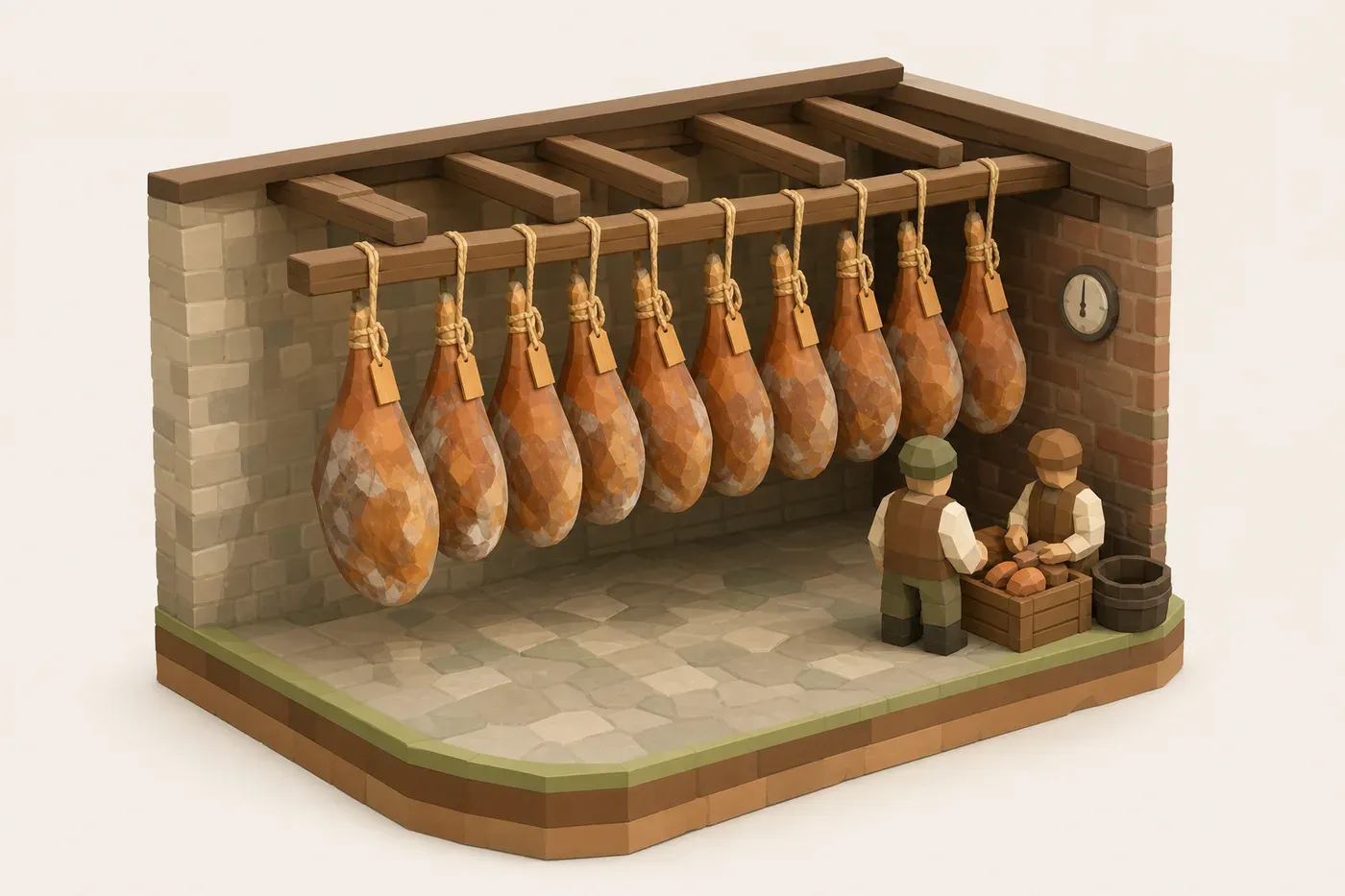
Spanish standard for Iberian jamón, Real Decreto 4/2014 (boe.es); eaap.org, enriquetomas.com.
05 /Breed
Which pig
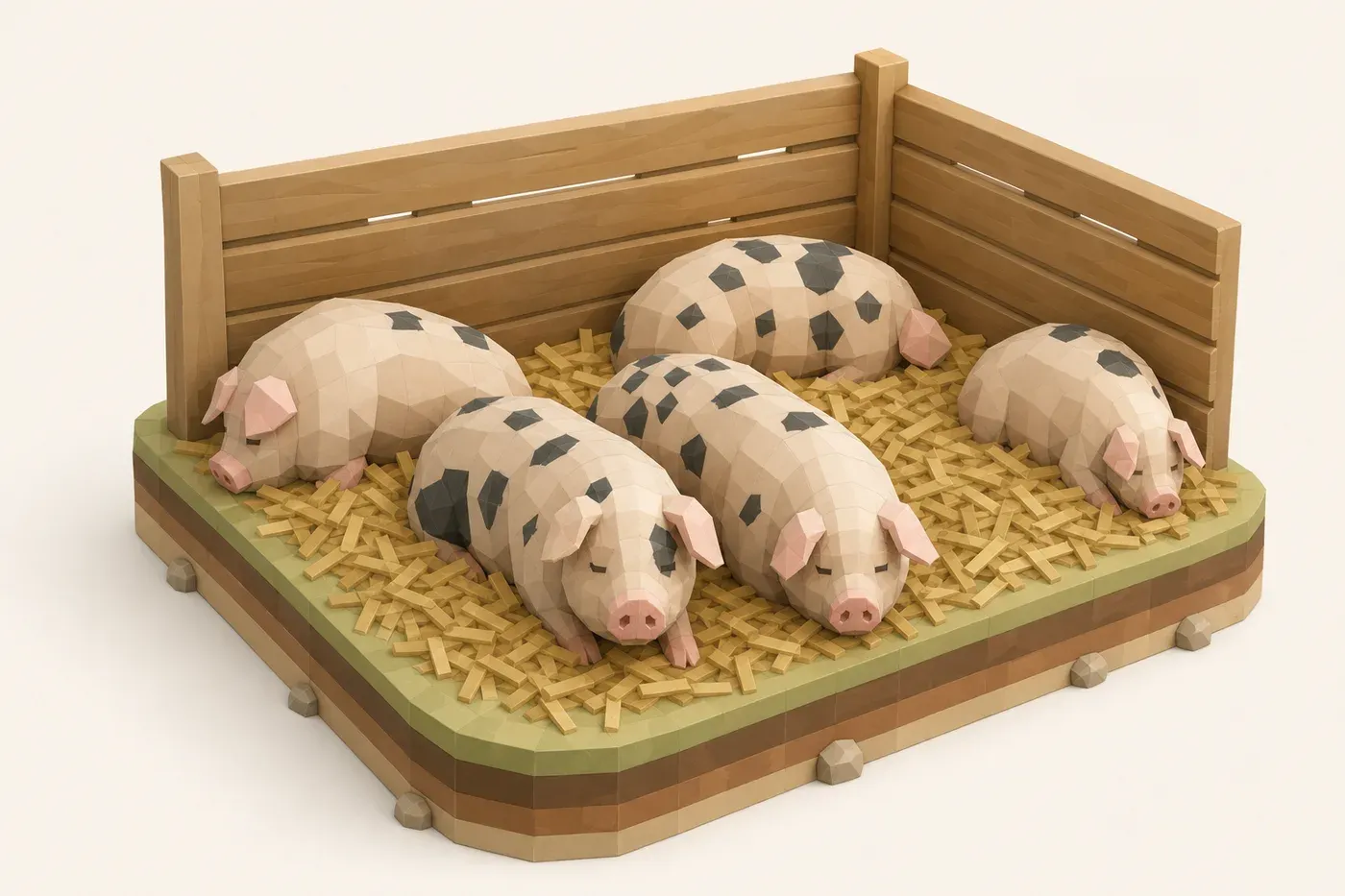
Mangalica
A curly-haired Hungarian pig, very hardy. Intramuscular fat of 2.9–18%, back fat of 4–8 cm: marbled meat, like the Iberian. It grows slowly, about 300 g a day, with around 5 piglets per litter.
Złotnicka Spotted
A local Polish breed. In Poland, traditional dry-cured hams are made from heavy free-range pigs. It is used to our climate. Breeders are overseen by Poznań University.
Our choice
The main herd will be Złotnicka Spotted or Mangalica. Trial batch: Mangalica × Duroc. We are looking for piglets from Polish breeders, and prices are still to be confirmed.
3tres3.com (Mangalica), zlotnickieksiegi.up.poznan.pl (Złotnicka), Real Decreto 4/2014 (Duroc).
06 /Swine fever and biosecurity
How we keep and feed the pigs
The Spanish model cannot be copied in full: in Belarus pigs are kept indoors only. We take from it what also works in a shed.
African swine fever
Under Belarusian rules, pigs on a private holding must be kept only in a closed, adapted building. Grazing is banned. Spanish-style grazing in an oak woodland is not possible here.
Housing
A warm shed with straw and a covered run behind a solid fence. 6–10 pigs a year.
Feed
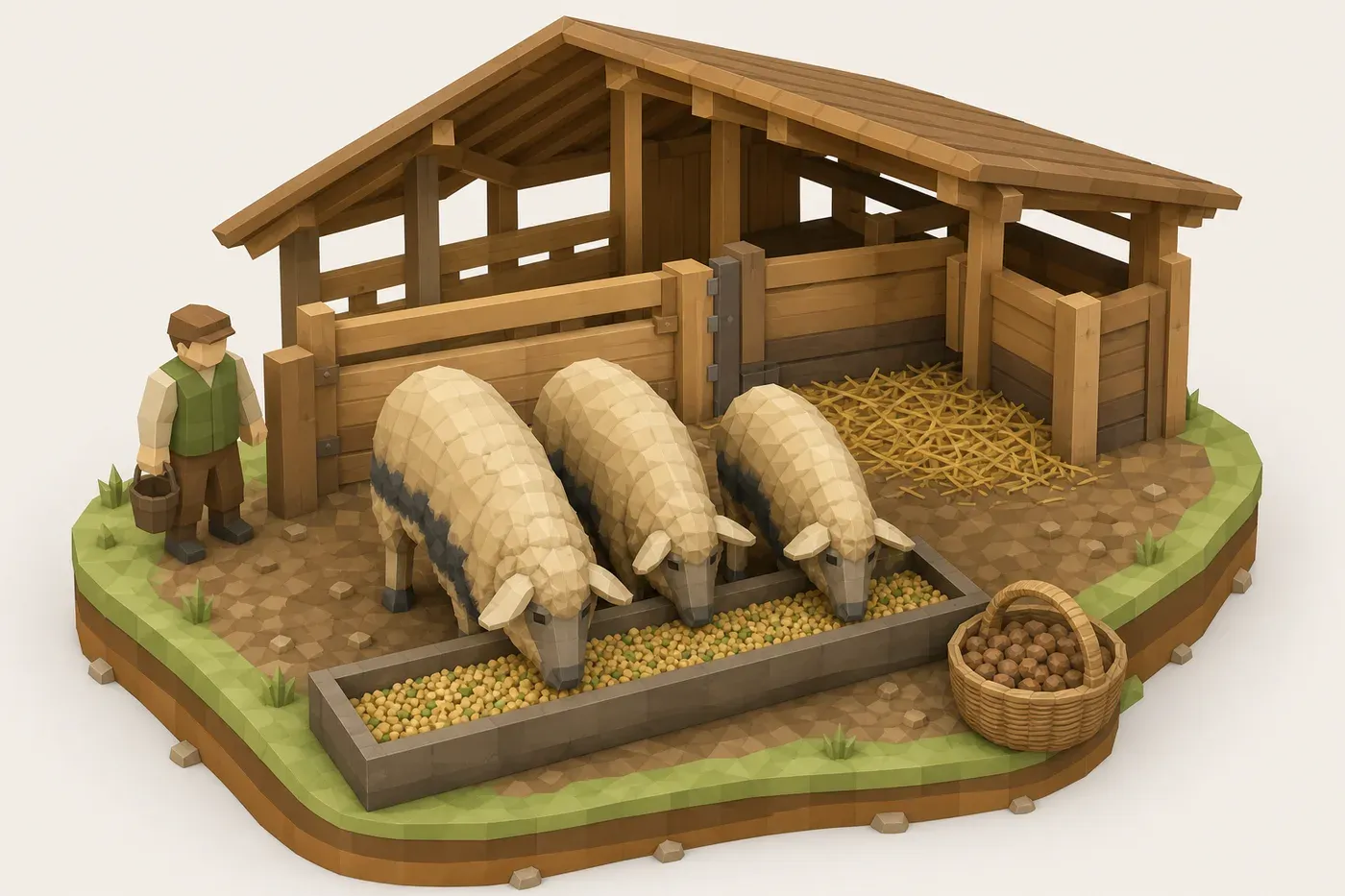
Barley, peas, apples from the orchard, whey from the cheese. Feed only from safe farms. Acorns from our own oaks only with the veterinary service's permission.
ASF rules: faolex.fao.org (Belarusian legislation). There were outbreaks in Belarus in 2024–2026, and we will check the restrictions before launch.