Product
Birch syrup
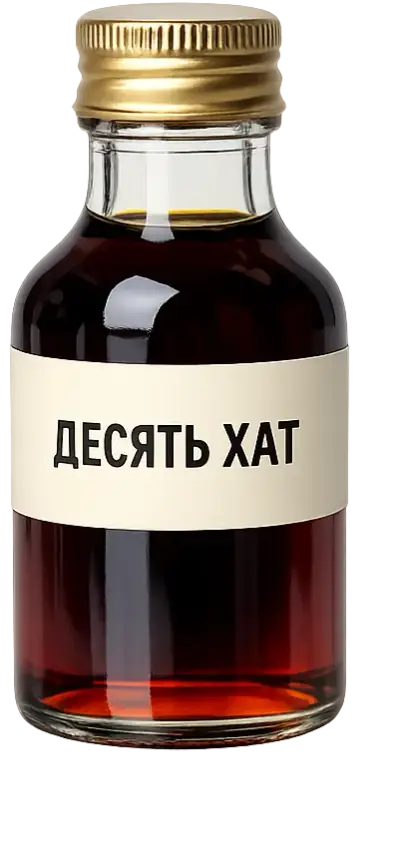
Birch sap boiled down 60–100 times. Thick, dark amber, much like maple syrup. Almost nobody makes it in Belarus. The raw material is free: the spring sap of our own birches.
What it is
Why it works
- 01
Taste
Caramel and molasses, a light tang, a mineral bitterness and a note of forest honey. It is less sweet than maple syrup.
- 02
Benefits
The sap contains potassium, magnesium and manganese. The syrup keeps these minerals, and its glycaemic index is lower than that of sugar.
- 100 ml bottle40–60 BYN
- First incomeApril of year 1

How we make it
How we make it
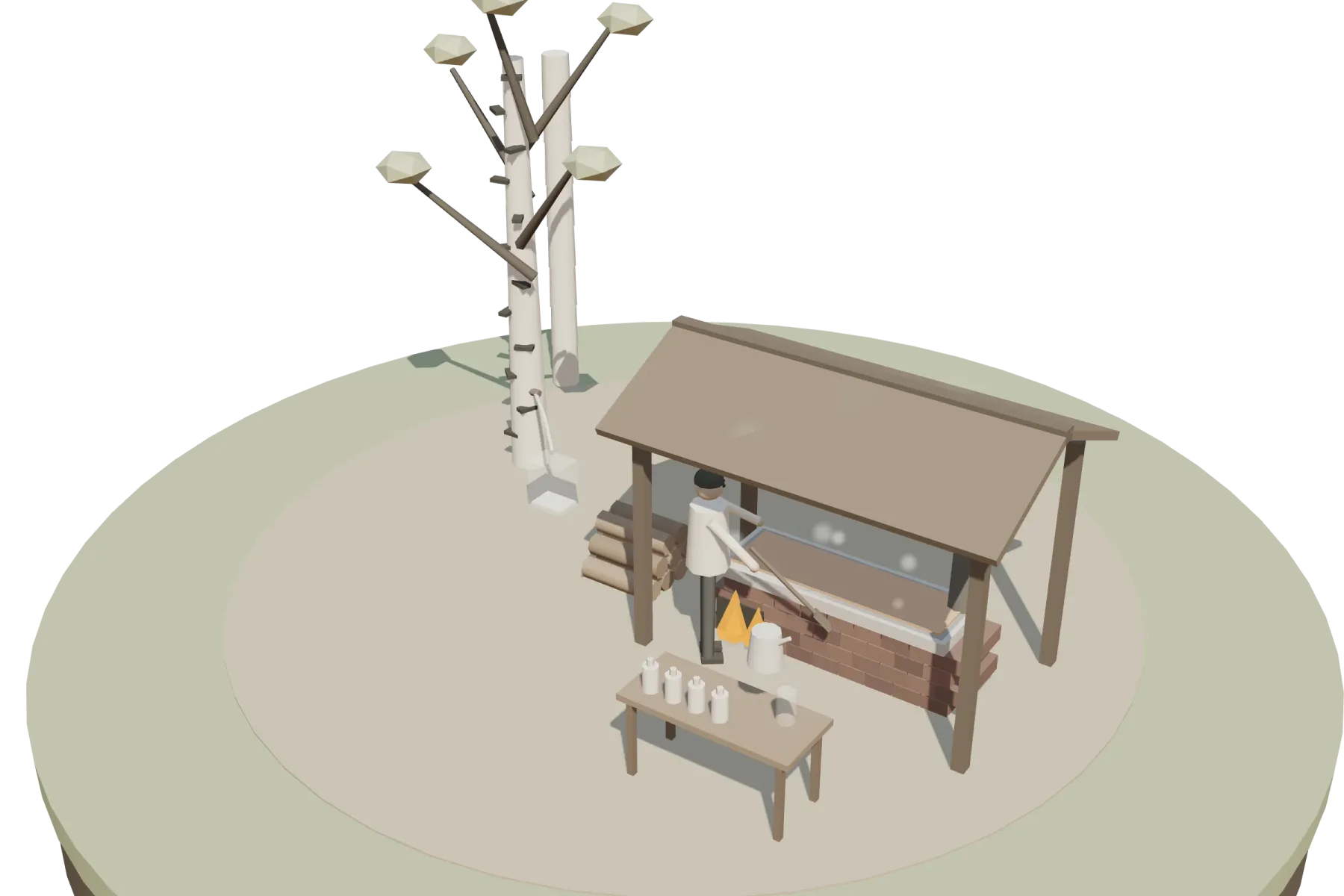
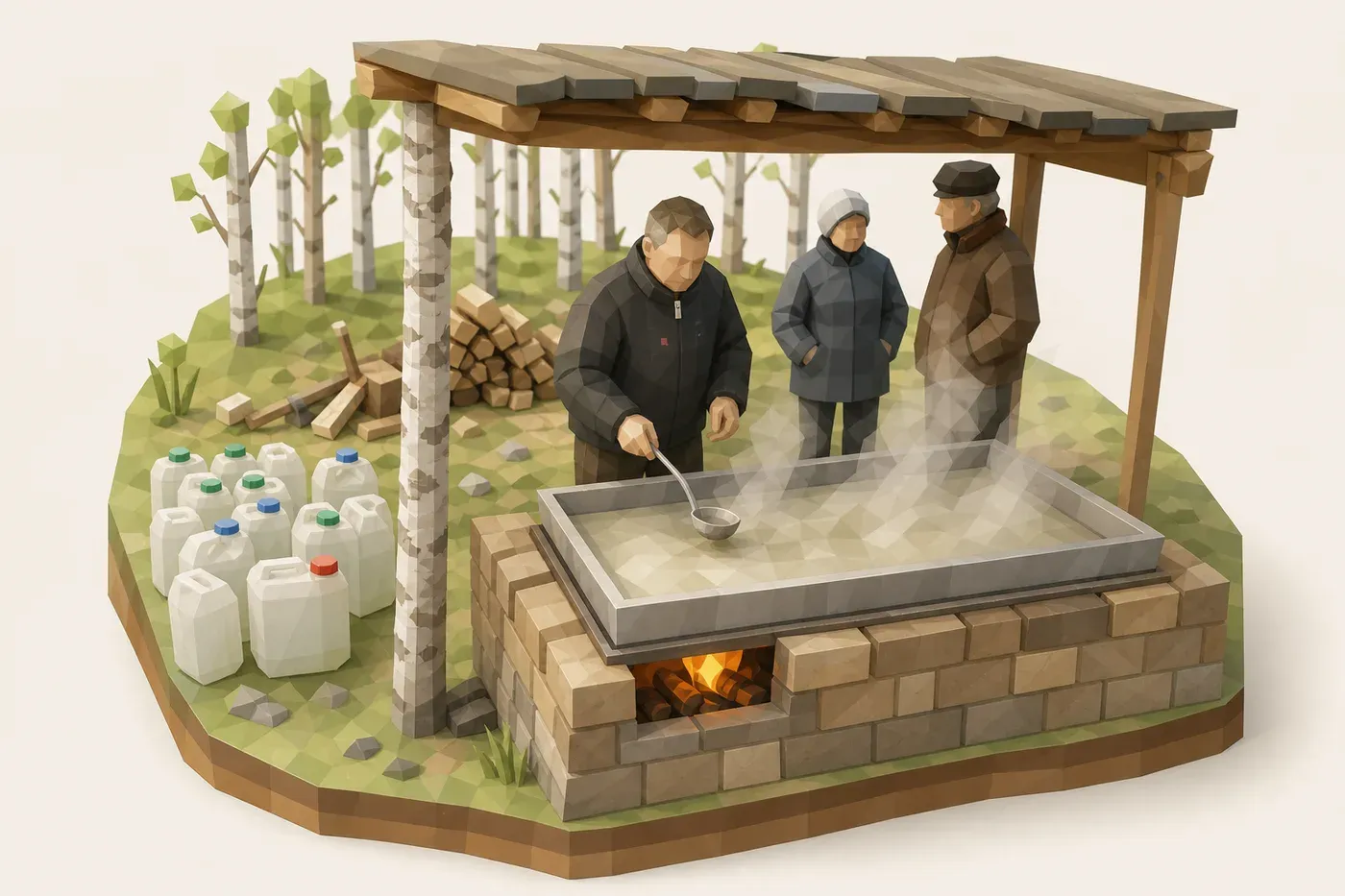
The syrup is made the way maple syrup is in Canada: the sap is collected while the birches are still bare, then boiled down slowly over a fire. All the equipment fits in a shed, and the main costs are firewood and time.
Early April, before the leaves
We choose birches thicker than 25 cm. We drill a 1 cm hole 3–4 cm deep and insert a tube leading into a canister.
Collecting every day
One tree gives 5–10 litres a day. In the first season we aim to collect 1,000 litres of sap.
Straight into the cold
Sap lasts no more than a day before it starts to ferment, so the canisters go into the cold at once.
Boiling down
We boil it in a thin layer on a stainless steel pan and skim off the foam. From 1,000 litres, 3–4 days of boiling give 10–12 litres of syrup.
How we serve it
How we serve it
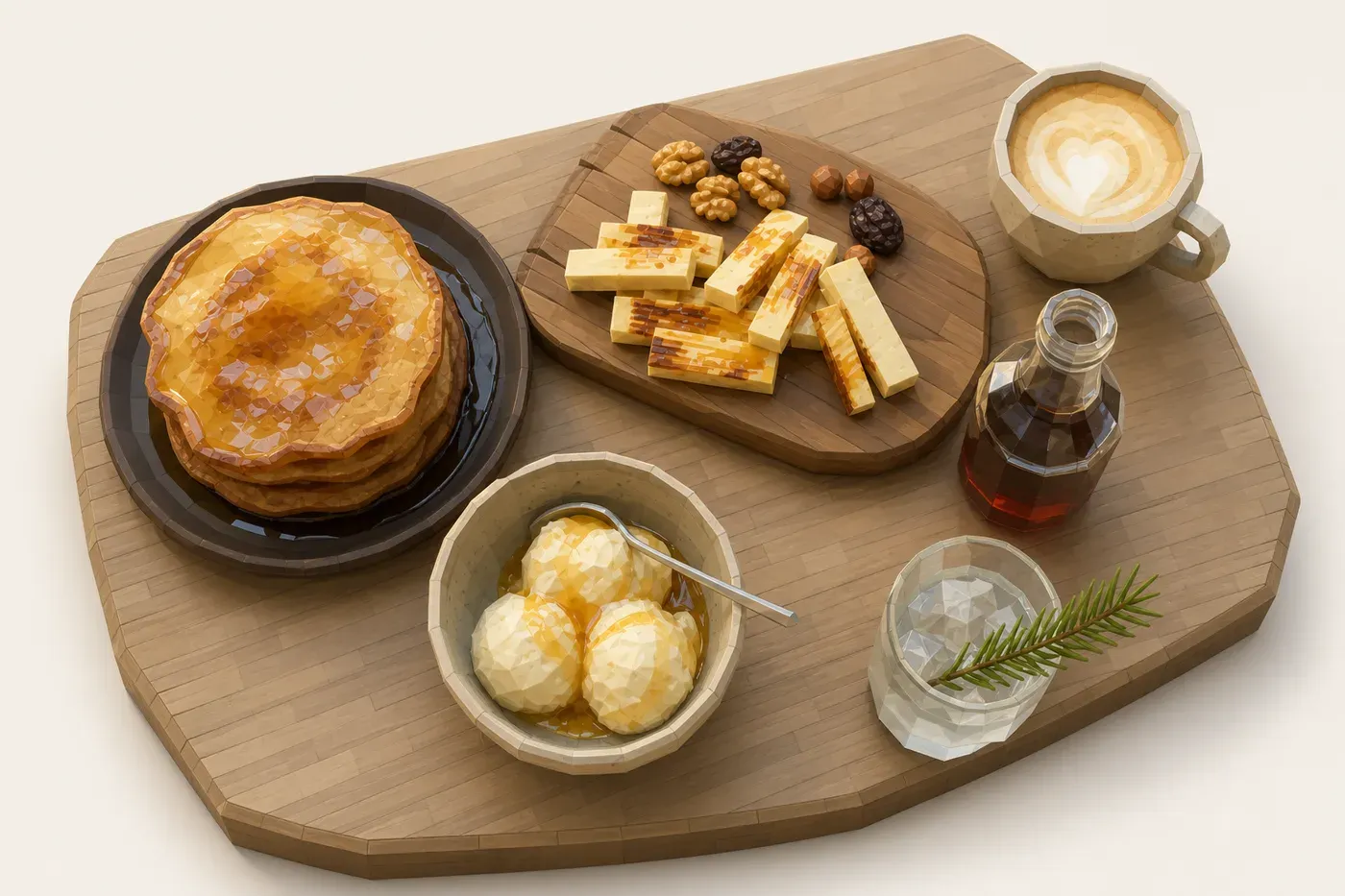
The syrup goes wherever sugar or jam would normally go. Guests first taste it at breakfast, and after that it finds its way into coffee, onto cheese and into cocktails. Here are the simplest pairings.
- 01
Pancakes and syrniki
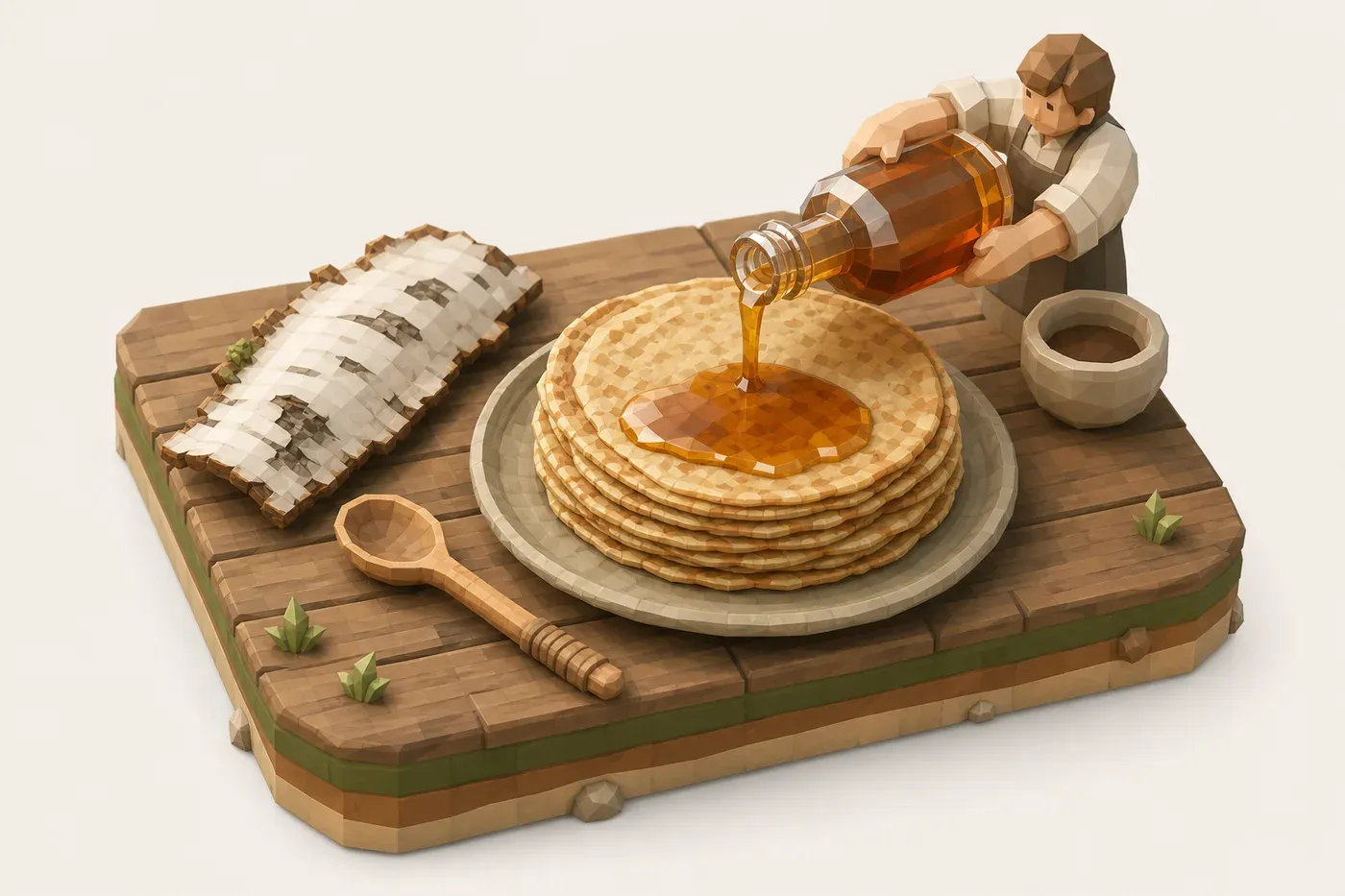
Poured over them instead of condensed milk and jam. This is how most people try it first.
- 02
With cheese
Smoked klinkovy cheese (bag-pressed farmhouse cheese), a drop of syrup and a walnut on one board.
- 03
In coffee and porridge
A spoonful in a latte instead of sugar. In the morning, on oatmeal or buckwheat with berries.